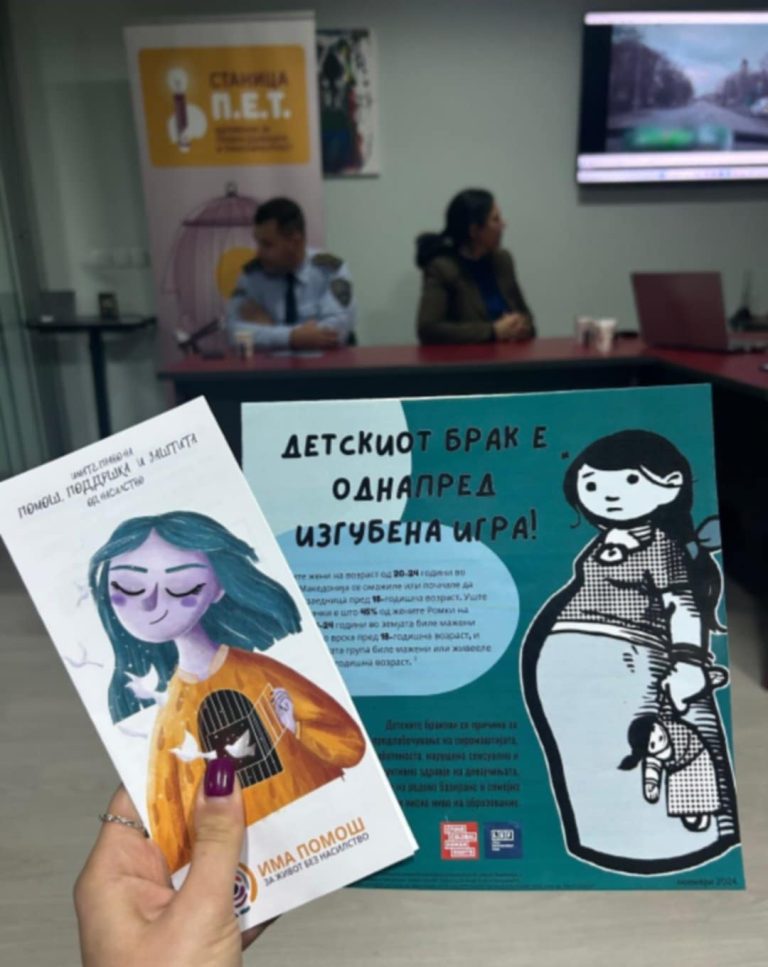
“Women around the world want and deserve an equal future free of stigma, stereotypes and violence, a future that is sustainable and peaceful, with equal rights and opportunities for all. To achieve that, the world needs women at every decision-making table.”
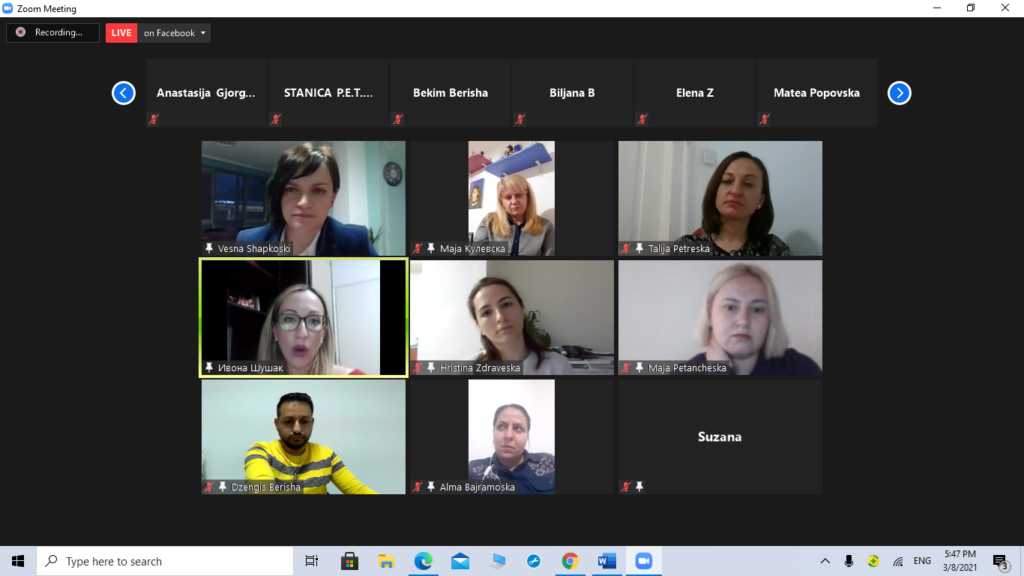
On 08th of March 2021 was held an online discussion on the topic: „Emancipation and domestic violence – regulation and practice”, that was organized by the Association for Legal Education and Transparency LET Station and Law Clinic – Faculty of Law UKLO. The discussion was actively attended by 38 representatives of institutions, academia, lawyers, civil activists and citizens who discussed the procedures and challenges in dealing with domestic violence.
Domestic violence is one of the biggest obstacles on the road to women’s emancipation, so all social actors must take the necessary measures for a quick and effective response to prevent and deal with it.
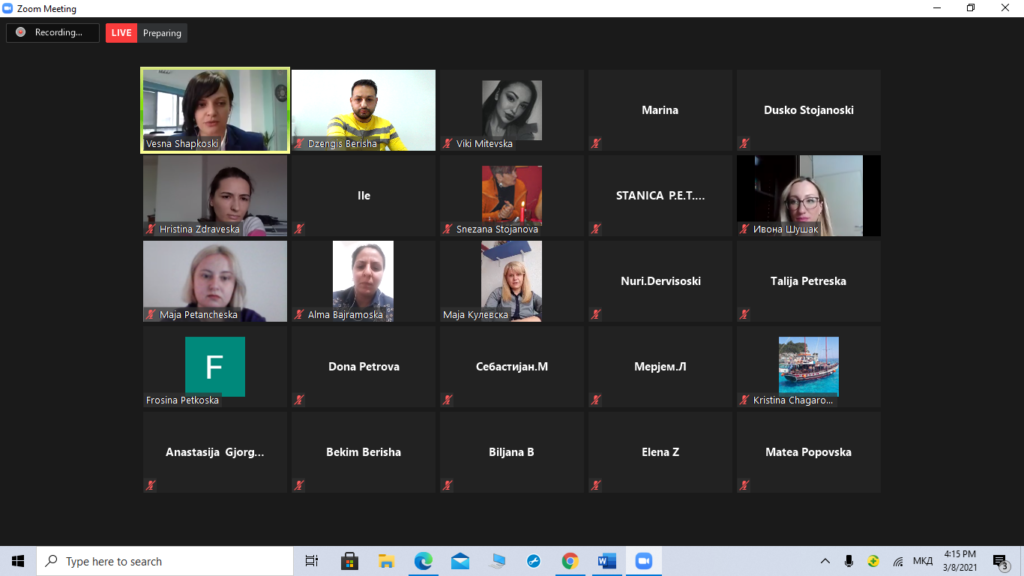
The moderator of the discussion, the executive director of the LET Station – Vesna Shapkoski started the discussion with a short introduction regarding the meaning and celebration of the International Women’s Day – 8th of March, which today ranges from being a national holiday in some countries to being largely ignored elsewhere. In some places it is a day of protest, in others it is a day when femininity is celebrated. She also pointed out that domestic violence can take many forms, from emotional to sexual and physical abuse and threats of abuse, and that it can occur in heterosexual or same-sex relationships and is not always easy to identify.
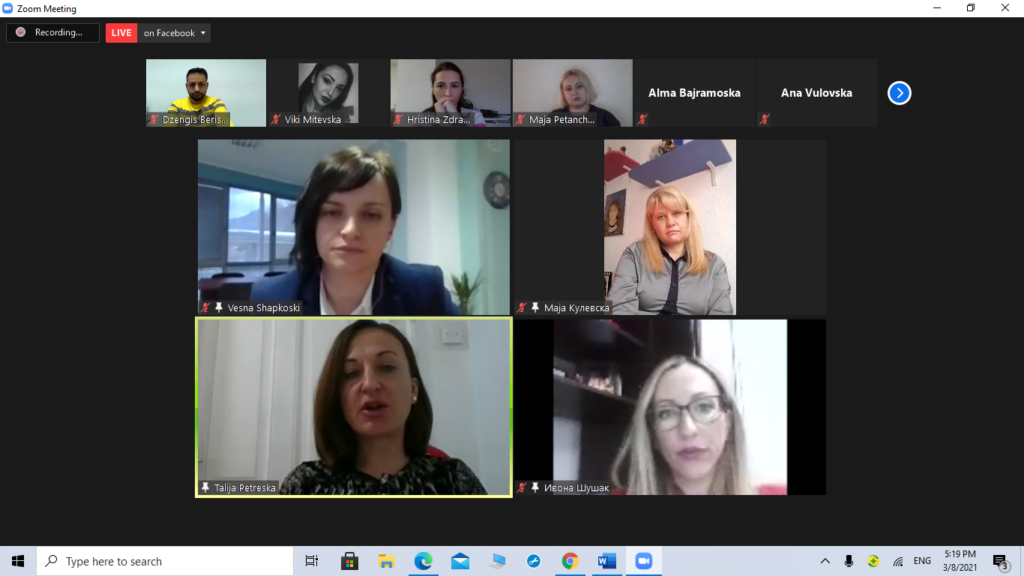
Several other speakers who directly work in the field of protection of victims of domestic violence and face this issue on a daily basis contributed to the discussion.
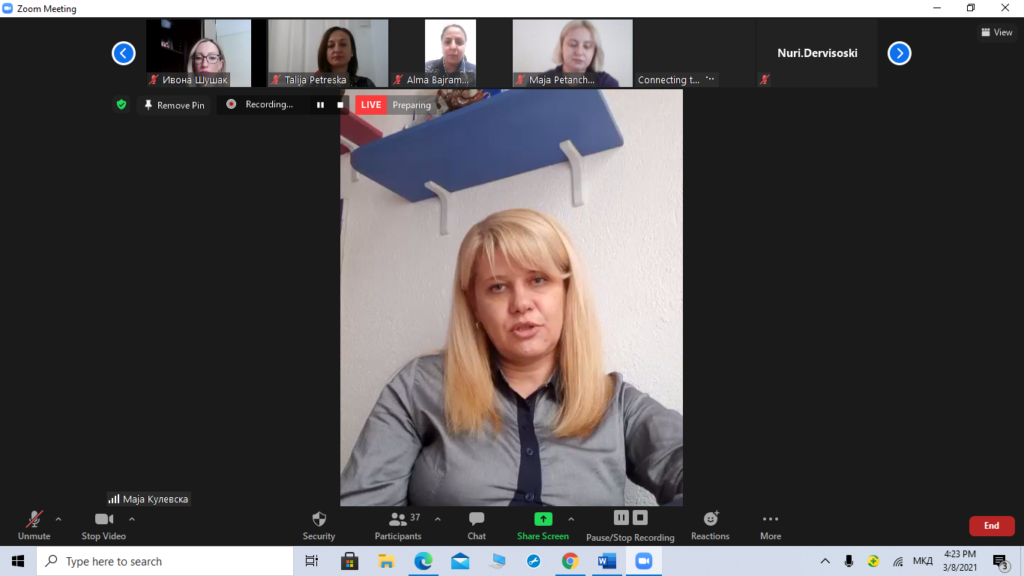
Thereby, the inspector NCCR at OVR Prilep – Maja Kuleska gave a brief overview of “The role of the Ministry of Interior affairs in dealing with cases of domestic violence”, noting that experience shows that institutions have multi-sectoral coordination in resolving cases of domestic violence after filing a complaint other forms of violence are reported for cases of physical violence. According to her, especially during the pandemic and its consequences, as well as the introduced preventive measure for limited movement have contributed to increasing the number of cases of domestic violence.
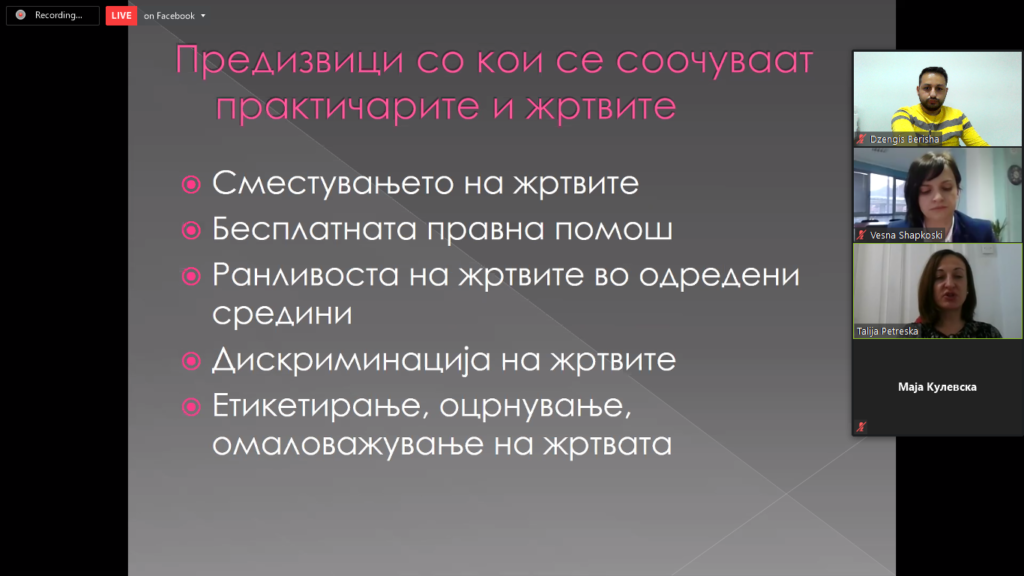
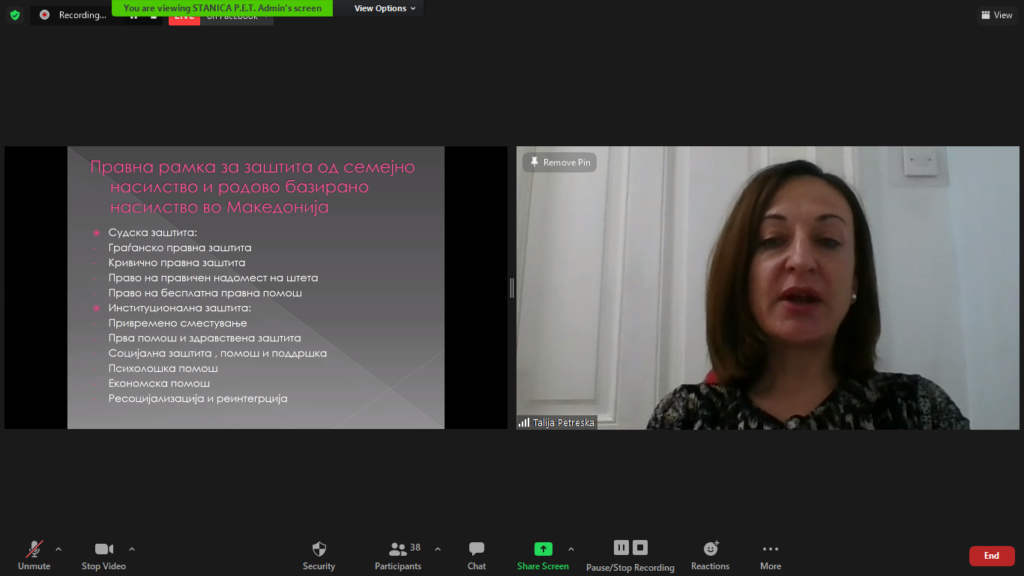
Lawyer Talija Petreska spoke about “Reporting Domestic Violence in Practice” and noted that practice is one of the most important indicators in measuring the success in dealing with domestic violence. At the same time, dealing with cases of domestic violence is a challenge because it is often difficult for victims to report, as there are many other factors that contribute to giving up or accepting it as a normal occurrence.
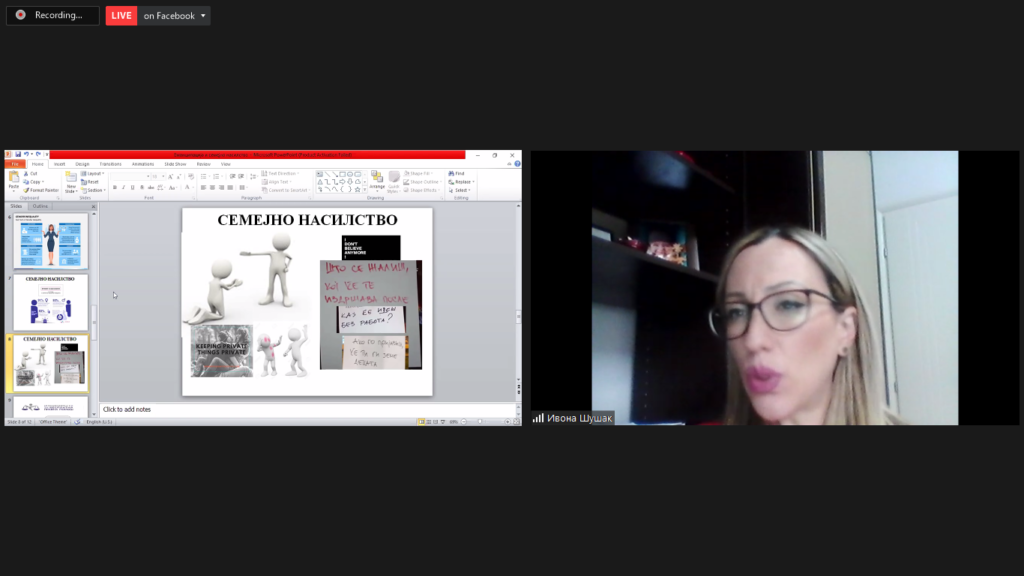
Ivona Shushak – Head of the Legal Clinic in Bitola shared her experiences regarding “Protection of victims of domestic violence in the system of free legal aid” and shared that when we talk about victims of domestic violence, we often talk about members of marginalized communities, people at social risk, people who, in addition to the fear of reporting, also face financial inability to take any action. In that regard, the state is obliged to provide opportunities for their protection which will be borne by the state.
At the end of the discussion, it was jointly stated that International Women’s Day is a time to reflect on the progress made, to call for change and to celebrate acts of courage and determination by ordinary women, who play an outstanding role in the history of their countries and communities.